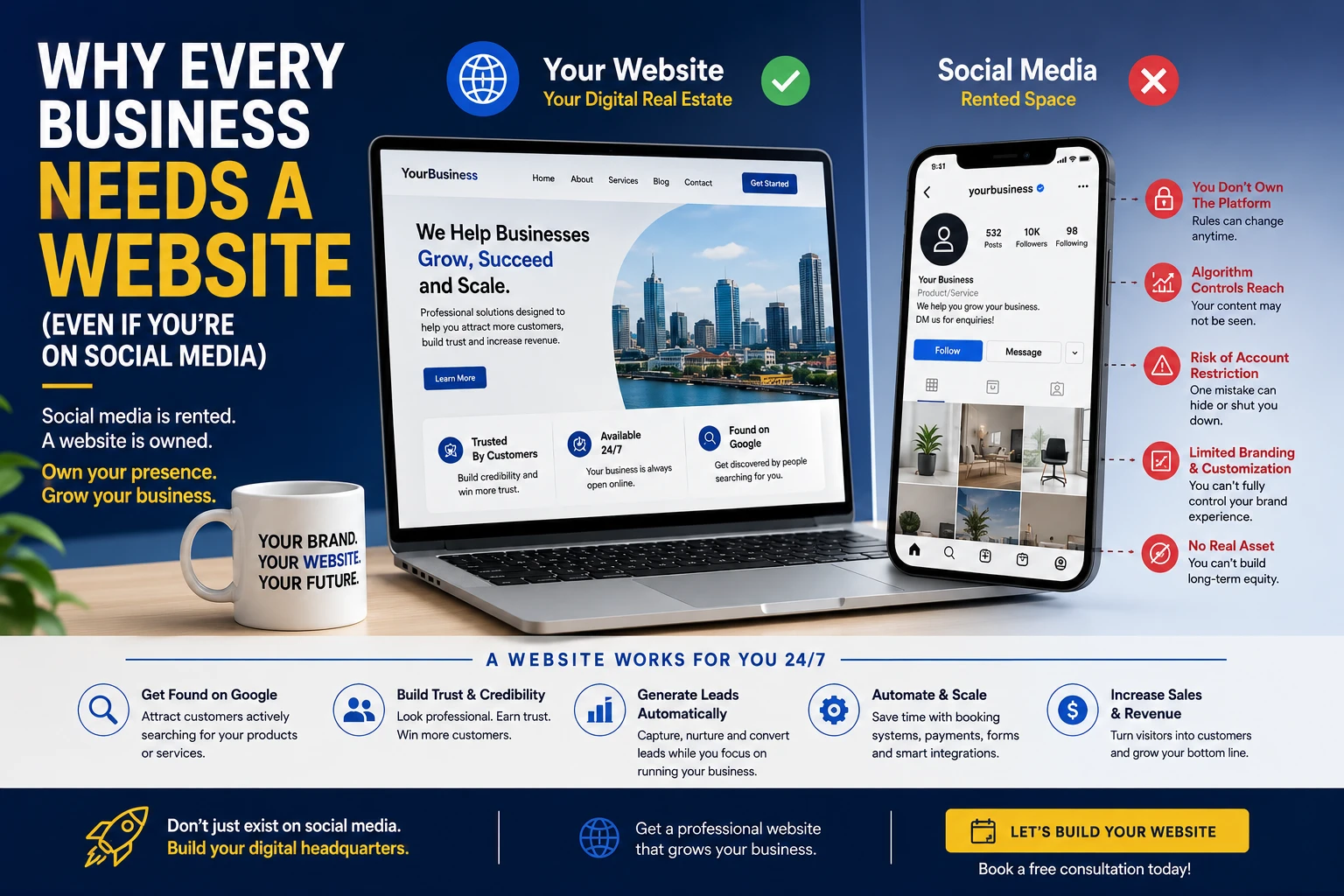
Why Every Business Needs a Website (Even If You're on Social Media)
You’ve probably heard this before:
“I already have 10,000 followers on Instagram. Why do I need a website?”
Or:
“Customers find me on Facebook and TikTok—I’m doing fine.”
At first glance, it sounds reasonable.
Social media has made it easier than ever to launch and promote a business. You can post products, respond to messages, run ads, and build an audience—all from your phone.
But here’s the uncomfortable reality:
Social media is rented land. Your website is digital real estate you own.
Algorithms change. Accounts get restricted. Platforms evolve. But a professional website remains one of the few digital assets fully under your control.
If your business depends entirely on social platforms, you’re building your future on infrastructure you don’t own.
This article explains why every business needs a website, even in an era dominated by social media.
1. Ownership vs. “Rented Space” — The Social Media Trap
Social platforms are powerful marketing channels.
But they should never become your entire business.
When your business operates exclusively through Instagram, TikTok, Facebook, or similar platforms, you surrender control over:
-
Customer access
-
Content visibility
-
Data ownership
-
Platform policies
-
Revenue opportunities
One algorithm update can dramatically reduce your reach.
One account issue can pause your sales pipeline overnight.
One platform outage can leave customers unable to reach you.
What Changes When You Own a Website?
A professional website gives you complete control over:
Your Customer Journey
You decide:
-
What visitors see first
-
What action they take
-
How they move through your sales process
Your Brand Experience
No competing content.
No distracting feeds.
No platform-imposed limitations.
Your Customer Data
You gain access to valuable business intelligence:
-
Visitor behavior
-
Lead sources
-
Conversion tracking
-
Customer acquisition insights
Your website becomes a business asset that grows in value over time.
2. Credibility and the Modern Consumer’s Behavior
Consumer behavior has changed.
Today, most customers research before buying.
Whether someone discovers you through social media or receives a referral, they often perform one additional step:
They search your business online.
And what they find influences trust instantly.
Why a Website Builds Trust Faster
Imagine these two businesses:
Business A
Instagram page only.
Business B
Professional website with:
-
Business email
-
Company profile
-
Service pages
-
Testimonials
-
Portfolio
-
Contact forms
Which feels more established?
Most consumers associate websites with:
-
Stability
-
Professionalism
-
Reliability
-
Long-term commitment
A professional domain instantly improves perception.
Examples:
❌ yourbrand_business@gmail.com
✅ hello@yourbrand.com
This is one of the strongest benefits of having a website—it helps businesses build credibility online before a conversation even starts.
If competitors appear professionally on Google while your business only exists on social platforms, customers may interpret that difference as credibility.
3. The Power of Local SEO & 24/7 Organic Traffic
Your website does not sleep.
It works:
-
During business hours
-
Overnight
-
Weekends
-
Holidays
That means customers can discover and engage with your business anytime.
What Is Local SEO?
Local SEO simply means optimizing your website so people find your business when searching nearby.
Examples:
-
“best accountant near me”
-
“website developer in Abuja”
-
“interior designer in Lagos”
-
“consulting company in Port Harcourt”
Unlike social media, where users scroll passively, search visitors already have intent.
They are actively looking.
That makes website traffic highly valuable.
How Local SEO Helps Small Businesses
With effective local SEO for small business, your website can:
-
Appear in Google searches
-
Generate inbound leads
-
Attract qualified prospects
-
Reduce dependence on paid ads
Your website becomes your most reliable sales channel.
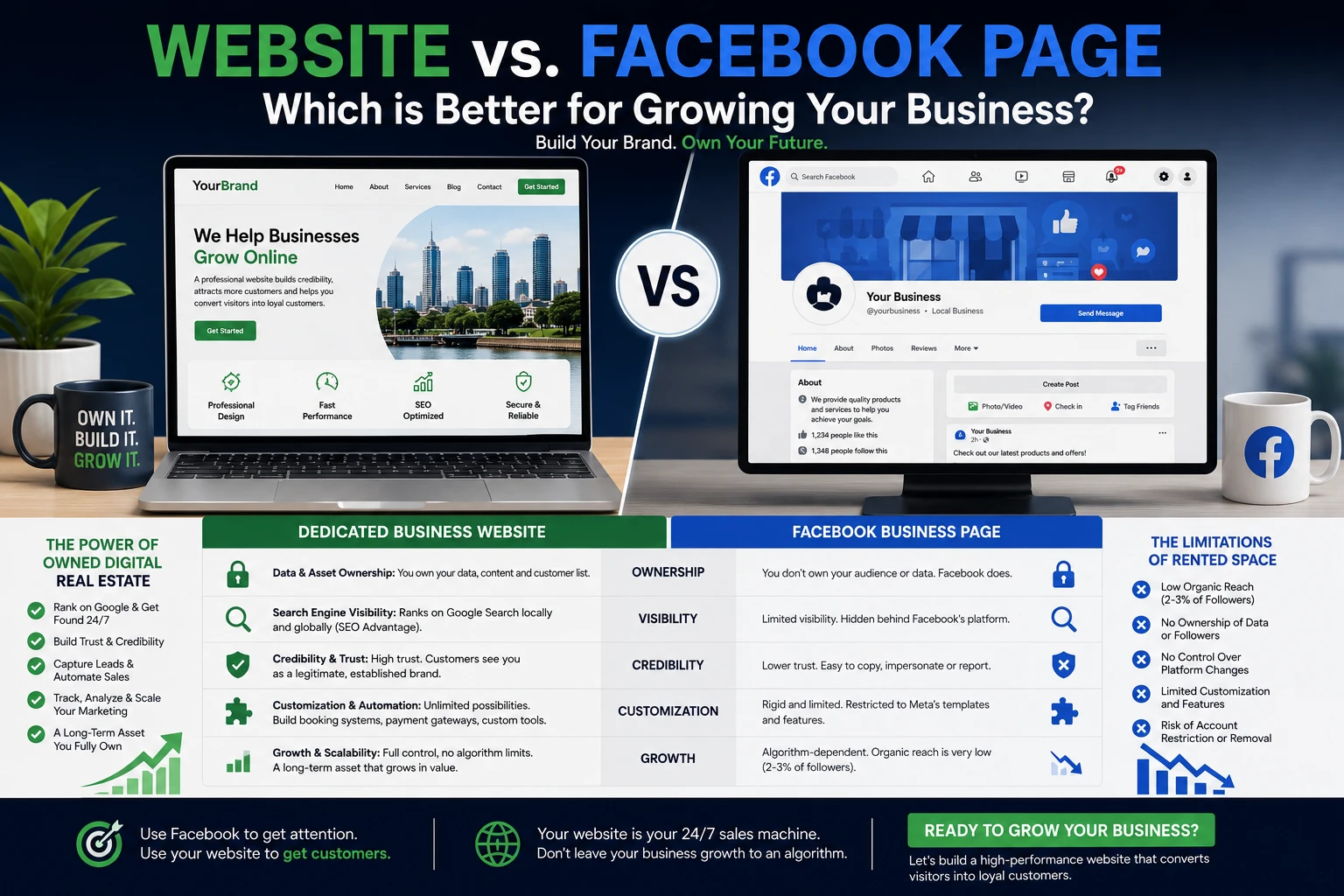
4. Professional Website vs Social Media Profiles
Many businesses assume these tools compete.
In reality, social media and websites should work together.
Here’s the difference:
| Metric | Professional Website | Social Media Profiles |
|---|---|---|
| Ownership & Control | Full ownership and control | Controlled by platform rules |
| Brand Experience | Fully customizable | Limited templates and layouts |
| Search Engine Visibility (Google) | Strong SEO potential | Limited indexing |
| Customer Data & Analytics | Deep business insights | Platform-controlled reporting |
| Lead Generation | Advanced forms and automation | Basic messaging |
| Custom Features & Automation | Booking systems, payments, portals | Limited integrations |
| Scalability | Unlimited growth potential | Platform limitations |
| Long-Term Asset Value | Compounds over time | Audience dependency |
This is the core of the business website vs social media conversation:
Social media attracts attention.
Websites convert attention into business growth.
5. Unlocking Scalability and Technical Automation
A website should not be viewed as a digital brochure.
It should function as an operational system.
Modern websites reduce manual work and improve efficiency.
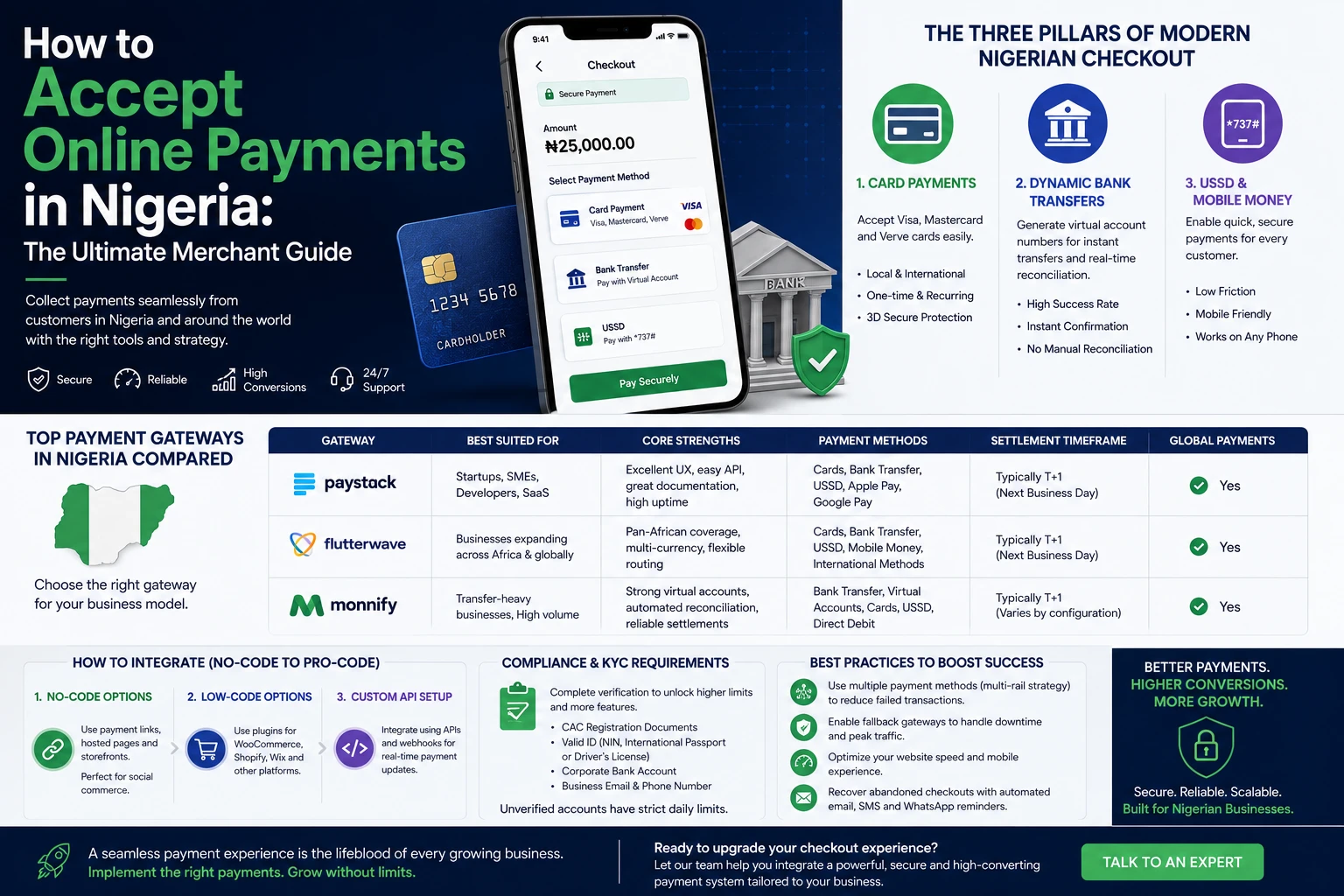
Direct Sales & Seamless Payments
Your website can:
-
Accept payments instantly
-
Process orders automatically
-
Deliver digital products
-
Manage subscriptions
No endless DM conversations.
No manual payment confirmation.
Automated Client Onboarding
Instead of:
“Please send details via WhatsApp…”
Your website can automatically:
-
Collect inquiries
-
Qualify leads
-
Schedule meetings
-
Trigger follow-up emails
Your business becomes faster and more scalable.
Smarter Marketing Through Data
Websites unlock advanced tracking tools that help businesses make better decisions.
Examples include:
-
Visitor tracking
-
Conversion measurement
-
Retargeting campaigns
-
Audience segmentation
This enables more efficient marketing with stronger returns.
That’s how modern digital presence for companies creates measurable growth.
Final Thoughts: Social Media Is Powerful—But It Shouldn’t Be Your Entire Business
Social media is excellent for:
-
Discovery
-
Engagement
-
Community building
But relying on it alone limits growth.
A website gives your business:
✔ Ownership
✔ Credibility
✔ Search visibility
✔ Automation
✔ Scalability
✔ Long-term business value
The businesses winning today are not choosing between websites and social media.
They are combining both.
Social media captures attention.
Your website converts attention into customers.
Stop leaving opportunities—and revenue—on the table.
Claim your digital real estate and work with a professional technical team to build a high-performance website designed around your business goals, customer journey, and long-term growth strategy.
This article is structured for SEO, readability, conversion, and long-term ranking potential around commercial-intent searches.

Comments: